

The New York Chapter of YCW was founded in 2014 and now hosts monthly events with expert speakers, cultural excursions and social meet ups.
On April 16, Young China Watchers and CINGS (China Institute Next Generation Serica) co-hosted an insightful night of discussion on the evolving U.S.-China relationship in climate policy and its implications for global decarbonization efforts. Held at The China Institute, the event illuminated the current state of global SDG (sustainable development goals) ambitions and explored potential pathways for future climate cooperation with China.
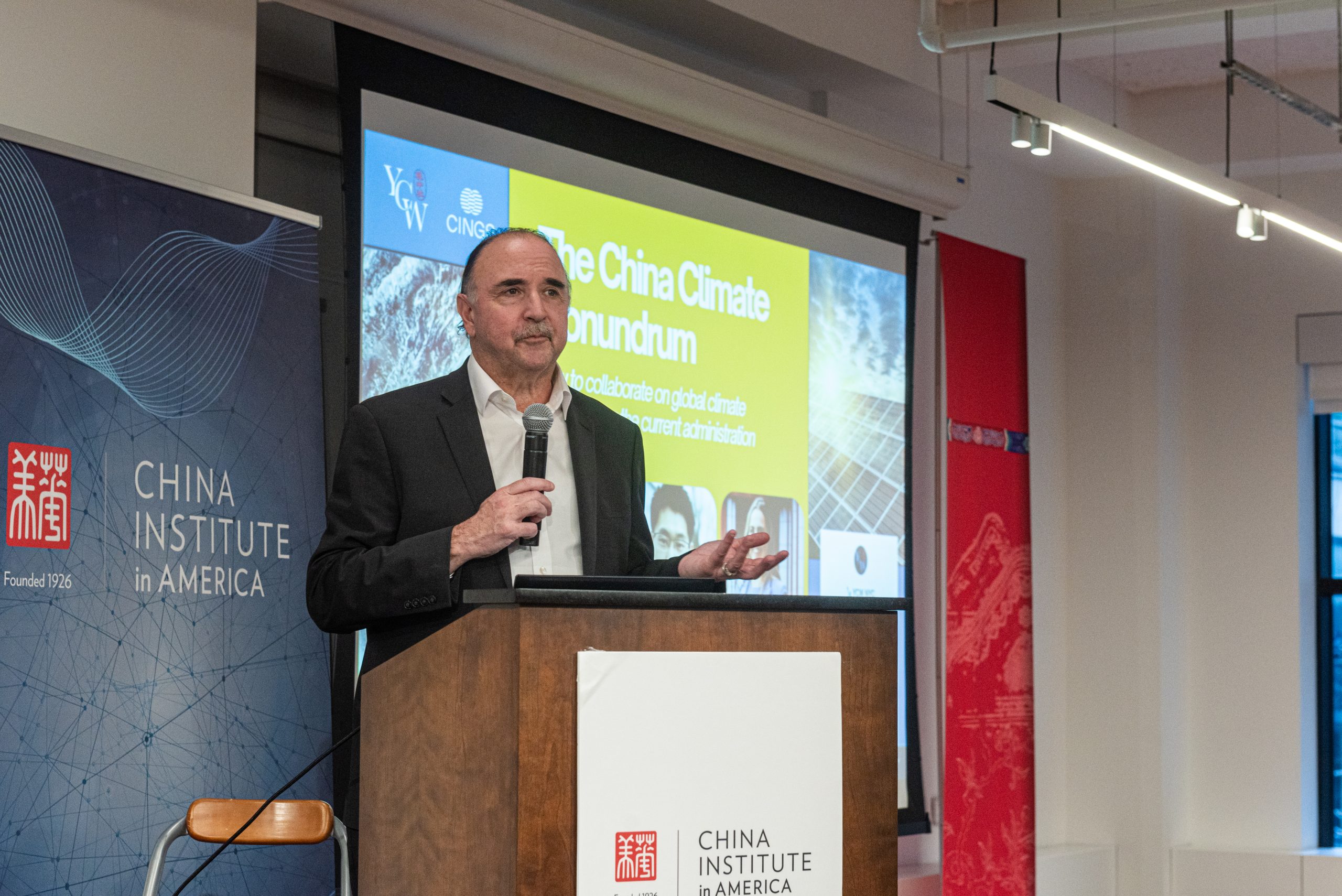
Cary Krosinsky, educator, author and co-founder of the Sustainable Finance Institute, made the opening remarks, emphasizing the importance of U.S.-China relations in addressing global climate challenges. He pointed out that while China is leading in decarbonization efforts and investing heavily in renewable energy technologies, the U.S. has struggled to maintain constructive engagement, citing political shifts and vilification of China as barriers.
Reflecting on former Secretary of State John Kerry’s advocacy for bilateral cooperation leading up to the Paris Agreement, Krosinsky questioned why such cooperation has waned under both the Trump and Biden administrations. He argued, “Anyone who cares about solving climate change should want China to succeed at its transition,” stressing the critical need for mutual respect and joint innovation.
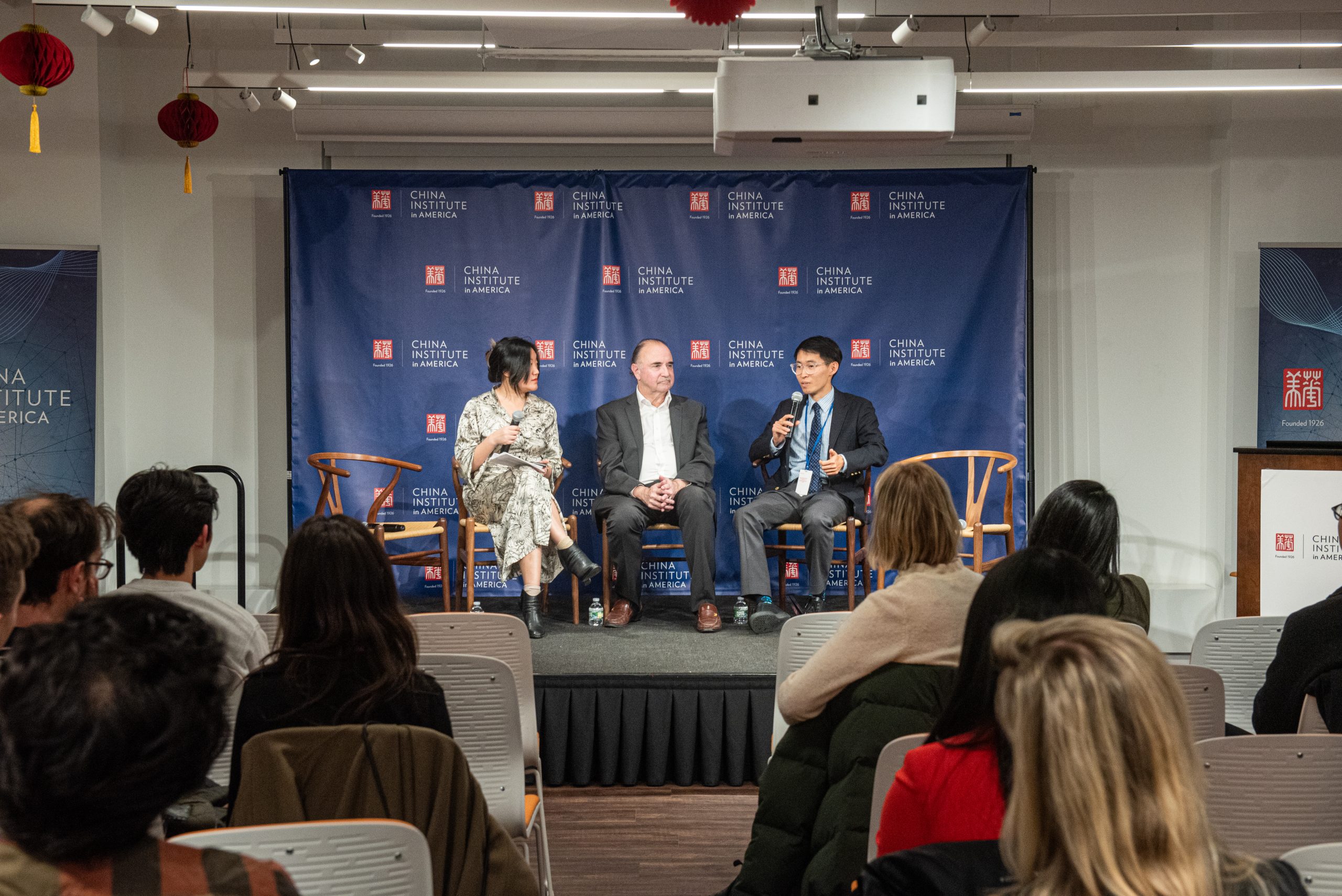
Li Shuo, the Director of the China Climate Hub at the Asia Society Policy Institute, then joined him on the stage in a panel moderated by Elaine Chow, YCW New York chapter head.
The discussion explored China’s potential to step up as a global leader on climate action, especially given the U.S.’s recent policy rollbacks. Li Shuo started by providing insights into China’s current climate policies, acknowledging the challenges posed by its reliance on coal amid a slowing economy. He described China’s dual role as the largest emitter of carbon and the leading producer of clean technology.
Li Shuo pointed to recent uncertainties – both the domestic economic slowdown in growth and global turbulence – in strengthening China’s political desire to ensure energy security. “China wants to make sure it has sufficient energy resources at home and what China has in its energy portfolio is a lot of coal, which happens to be the dirtiest fossil fuel. So there is a lot of headwind when it comes to China making the transition to decarbonize.”
“At the same time, China has, over the last decade or so, become the largest investor, developer and manufacturer of renewable energy. And those impact sectors have started contributing very significantly to China’s economic growth – it is about 30% of its growth these days.”
The discussion then segued into China’s potential to step up as a global leader on climate action, especially given the U.S.’s recent policy rollbacks. Krosinsky pointed to the current American administration’s remarks withdrawing support for the United Nations’ Sustainable Development Goals, “whereas China has completely embraced the SDGs.”
These developments, alongside the U.S. pullout of the Paris Accords and its likely no-show at the next COP Summit, puts China in a positive position for cooperation with other countries. “Especially Europe, and in Asia as well, there is a big opportunity to get along better.”
Li Shuo echoed this sentiment, bluntly assessing the U.S.’s position in the clean energy race: “The U.S. is not in the game at all. People talk about competition, but competition requires at least two players. Right now, there is no second player. The lead China has established is big and, at this point in time, irreversible.”
“As we go through Trump’s political pullback, the rest of the world is realizing that they must realign amongst themselves because they can not rely on the U.S. I think that really bears long-term consequences to the future of global carbon actions.”
Looking ahead, both panelists outlined potential paths for U.S.-China climate relations. Li Shuo described several scenarios for 2029, ranging from limited engagement under a Biden-like administration to a hopeful reset. “There are a lot of uncertainties, a lot of downsides, that have originated from the White House, and they could trigger a deeper reflection on economic nationalism and America’s China policy, a reset on both issues which could then create more political space for realignment on the climate agenda.”
Krosinsky emphasized the importance of private-sector relationships in maintaining climate progress in the meantime. “Something like 80% of assets managed in the financial system come from blue states and blue cities,” he noted. “Despite the anti-ESG rhetoric, investors haven’t slowed down. U.S. and Canadian pension funds are still interested in what China is doing. So tapping into these non-public expressions of interest and building partnerships with these folks who are the coalition of the willing, it’s still possible.”
Li Shuo added, “The increasing irony when it comes to the US China relationship, in the US context but also the Chinese context as well, is that the political direction of the relationship between the two countries are against the interests of the people on both sides. I have confidence that the public will raise their voices to shift the political and policy discourse.”
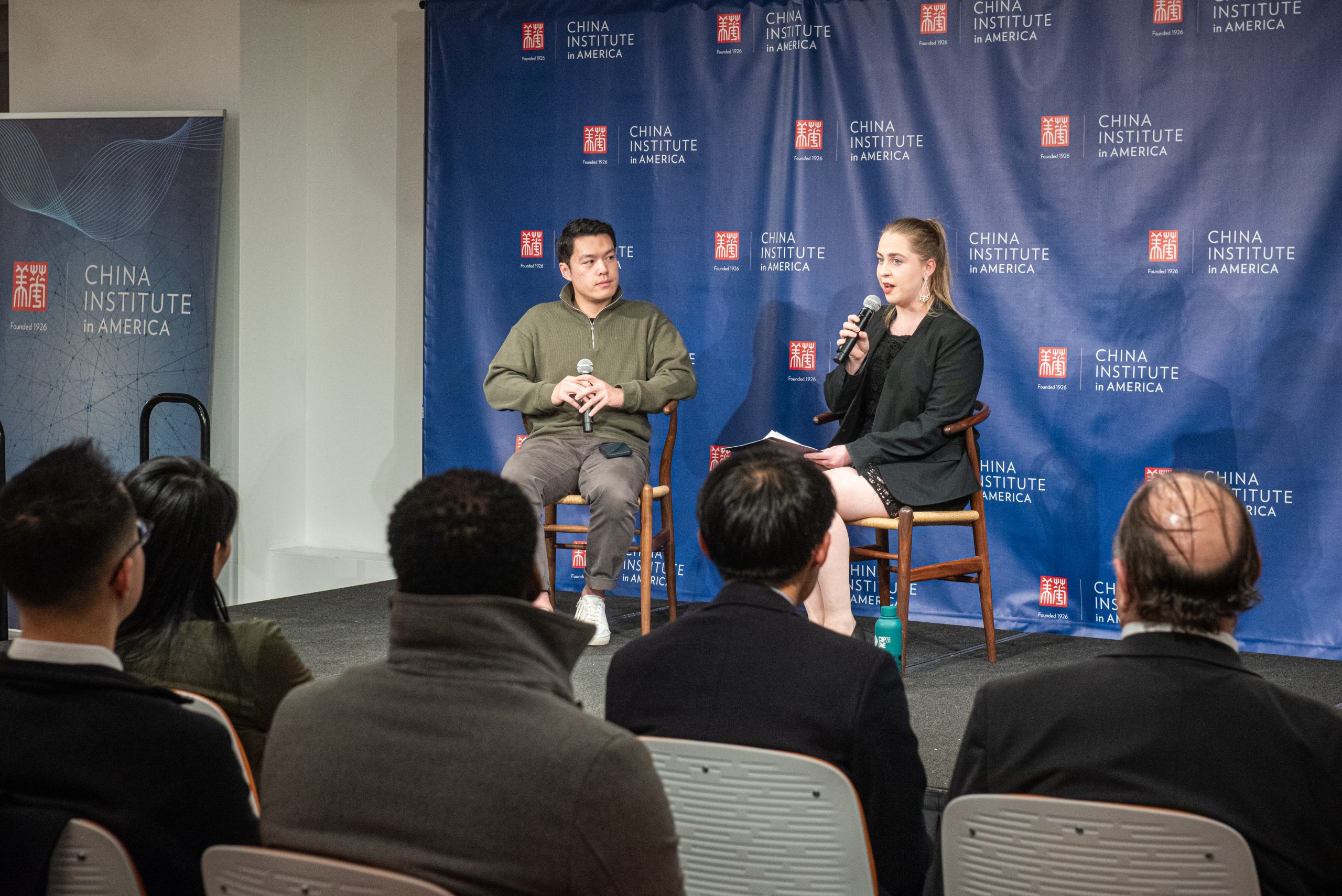
Kevin Zhongzhe Li, an Affiliated Researcher at the Asia Society Policy Institute’s Centre for China Analysis and CINGS member brought Taylah Bland, Senior Program Officer at the China Climate Hub and Fellow, Centre for China Analysis, to the stage for a fireside chat focused on climate adaptation and resilience.
These days, China is considered one of the highest at risk for adverse climate events. Bland listed some of the extreme weather events that have ravaged the country in the past few years, including unprecedented heatwaves, droughts, and typhoons. “Beijing recorded its earliest 30°C day since 1959,” she pointed out, emphasizing the alarming climate trends already emerging in 2025.
Beyond environmental concerns, Bland addressed the economic and social consequences of climate disasters. “Between July and September last year, China recorded ¥230 billion in damages,” she revealed, acknowledging that accurate economic data on climate impacts is still developing.
Discussing China’s climate policies, Bland noted that the country has traditionally prioritized mitigation over adaptation, largely due to its economic incentives. “We’ve seen China pivot to renewables and the new three industries, but adaptation is now making strides through legislation,” she explained, pointing to the 2022 National Climate Change Adaptation Strategy 2035 as a significant step forward. This strategy includes early warning systems, integration of adaptation into policymaking, and leveraging China’s technological capacities to better prepare for climate risks.
Looking ahead, Bland advocated for integrating climate adaptation into national security agendas and increasing regional risk assessments. “Recognizing climate adaptation as a security concern could unlock more funding and political urgency,” she stated, arguing that global benchmarking could improve accountability and drive progress. She also highlighted the importance of climate financing, noting that China’s adaptation funding had fluctuated in recent years. “It hit 32% in 2020, but dropped to 4% in 2021,” due likely to COVID, “but it shows that the capacity is there.”
Discussing China’s role in global climate governance, Bland highlighted several international initiatives. “At COP29, China hosted a high-level meeting on “Early Warnings for a Climate-Resilient Future” in which China released its Action Plan on Early Warning for Climate Change Adaptation (2025–2027) which aims to strengthen early warning systems and enhance climate adaptation policy,” she noted. “The idea is that if we can better understand the patterns behind these disasters and implement technology to track them, nations will have a better chance at preparing for them.” Additionally, Bland praised China’s capacity-building efforts for small island states, emphasizing that supporting vulnerable nations is key to ensuring global resilience. “China has recognized that extreme weather transcends borders. They are starting to make pretty strong headway in light of recent extreme weather impacts.”
Looking ahead, Bland and Li emphasized the role of international cooperation, particularly at the subnational level in regards to the United States. While Bland was skeptical about federal-level collaboration between the U.S. and China, she expressed optimism about city-to-city partnerships. “Shanghai and California, for example, share climate vulnerabilities as coastal cities,” she pointed out. She suggested that pilot programs and knowledge exchanges could enhance adaptation efforts globally. “We need tangible action alongside dialogue,” she asserted. “This isn’t just about governments making promises—it’s about real, practical solutions.”
Written by Elaine Chow. Photos by Yong Zhao. | Back to the NYC Chapter Page