DC – A New Era of Great Power Competition Provides Opportunities for China Experts to Thrive
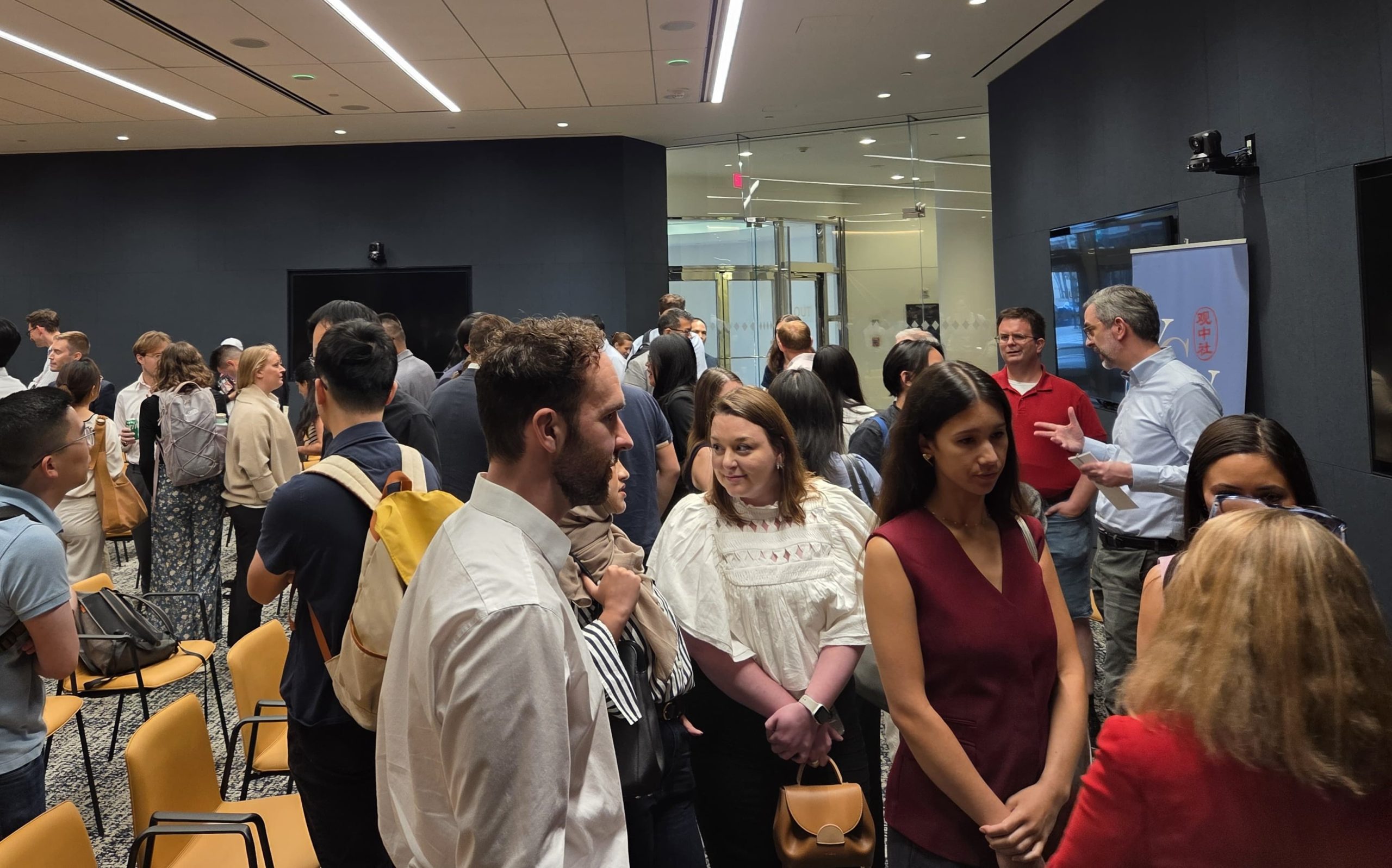
On July 23rd, Young China Watchers hosted a panel event focusing on how foreign businesses can leverage China expertise to navigate the evolving US-China relationship. The off-the-record event took place amid federal workforce reductions in Washington, D.C., which has disproportionately affected professionals with China-focused backgrounds. Approximately 200 attendees from the private sector, government, think tanks, and academia gathered to hear from three China experts whose careers have spanned both public and private sectors.
Panelists included Paul Haenle of JP Morgan Chase, Sarah Kemp of Intel, and Ted Dean of Albright Stonebridge Group (ASG), all of whom have extensive experience working in China and in government roles. The event was moderated by Michael Martina, foreign policy journalist at Reuters, who also reported for many years from Beijing before returning to the United States.
China’s complex diplomacy means talent must understand more than just the US-China relationship
The discussion kicked off with a level set about the position multinationals find themselves in as they do business in a changing Chinese environment. Panelists agreed that businesses must look beyond the bilateral US-China relationship and recognize the nuanced aspects of China’s relations with Latin America, Africa, the Middle East and Europe. China’s relationships with third countries have become a greater part of its business and geopolitical decisionmaking process as its global influence has grown, they agreed.
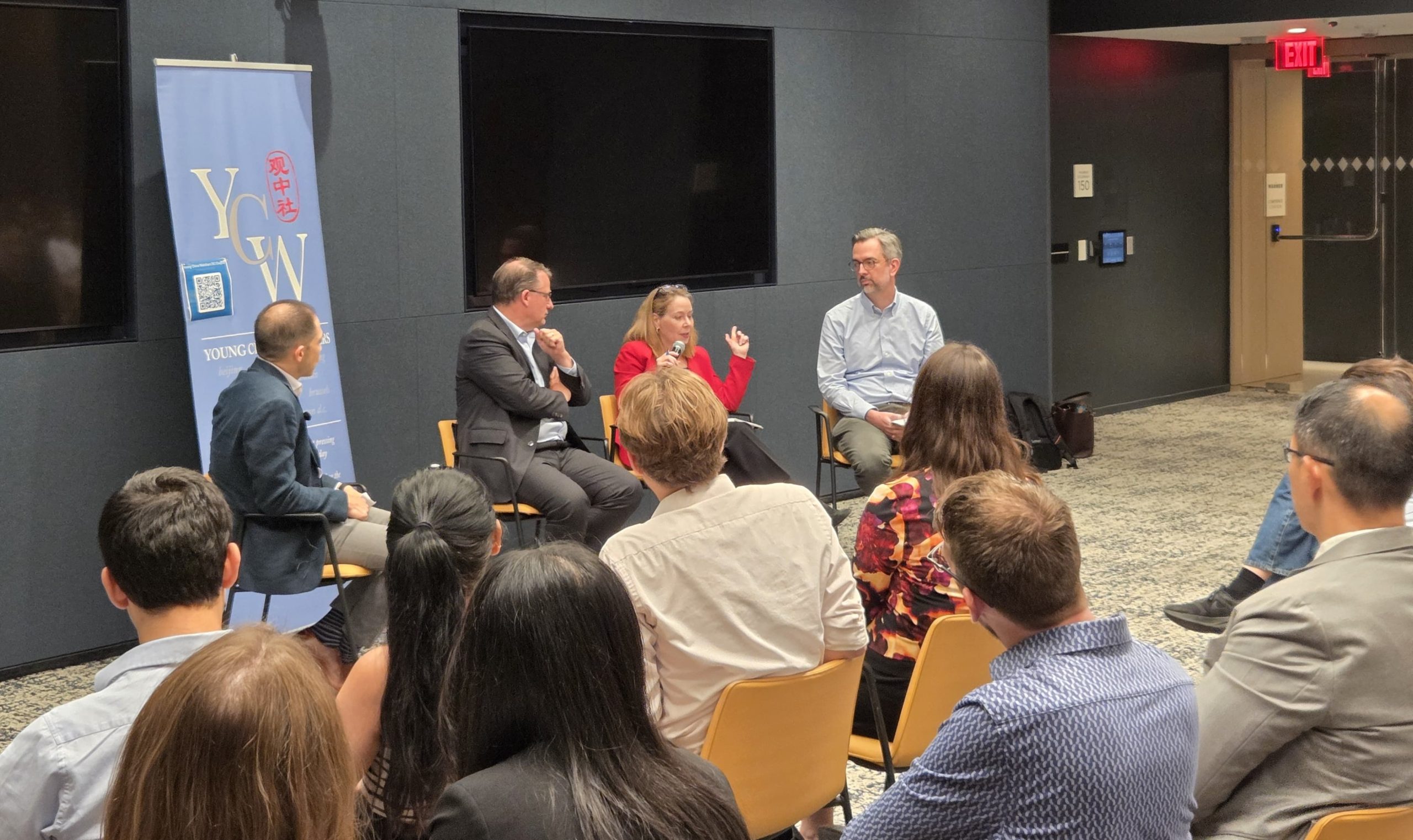
Panelists turned to the importance of both subject matter expertise and broad contextual awareness of China-related expertise, with panelists emphasizing the need for subject matter depth and broad understanding as essential to career success. Experience in third countries can play a role here, as seeing China or the United States from those countries’ perspectives can shape overall understanding of each, they added.
Companies must take a long-term view to be successful in China
Conversation then turned to the evolving role of the Chinese government in the domestic private sector, and how foreign businesses are adapting. Panelists noted that the most successful foreign enterprises are the ones who understand the value their business brings to the Chinese market, emphasizing the importance of continued engagement and a realistic, fact-based approach in decisionmaking and relationship building.
Continued engagement between China and the world benefits individuals and companies alike, they agreed, with panelists noting that there is usually a way for businesses to find ways to work together and succeed, even in challenging environments. The key is in identifying the right opportunities when they appear, the panelists noted. This is where China expertise becomes extremely valuable, as language skills and deep cultural knowledge are often required to identify and capitalize on these opportunities.
All participants noted the importance of being able to translate across cultural boundaries, adding China expertise into overarching business decisions, and then explaining those decisions to a Chinese audience as well.
Former government workers must be careful, even in the private sector
Even after transitioning out of the government service, former-US government officials may face specific limitations when engaging professionally with China, the panelists stressed. Some jobs in China can disqualify candidates for some US government positions, so candidates with China expertise should take a long-term view when evaluating short-term opportunities.
Nonetheless, all panelists expressed optimism in the career prospects of those with China expertise in the US private sector today, whether they have prior government experience or not. Despite the competitive bilateral relationship between China and the US, the volume of business working across both countries remains immense, and the need to understand both cultures, as well as China’s evolving relationships with third countries, remains great, they noted.
Opportunities continue to exist for candidates in this arena who have strong language and cultural expertise and who can help businesses take balanced, long-term views of China, they said, as they seek to navigate increasing divisiveness and polarization on both sides.
Author: Yikun Jiang. Yikun serves as Assistant Director for the China Program and the America-Eurasia Business Coalition at the Eurasia Center, where he is currently completing an internship. He earned his Master’s in Public Policy from Georgetown University, where he focused on international development, trade and security.