Relations with the US are China’s Central Consideration in the Iran war: A Conversation with Pak Yiu of Nikkei Asia
The US’s war with Iran has placed China in a difficult position as it must navigate the conflicting objectives of close trading partners who are now at war, said Pak Yiu, U.S. Correspondent at Nikkei Asia. At an event hosted on April 17th, 2026, by Young China Watchers’ New York chapter, Yiu joined Varda He and Camilla He of YCW to discuss China’s complex incentives, its investments in the Middle East, how it views the conflict, and the role it is likely playing behind the scenes to promote stability. The discussion drew on Yiu’s decades of experience reporting on China for outlets including Reuters, Nikkei and Agence France-Presse (AFP).
The event brought together members of the Young China Watchers New York community for a discussion of China’s stance on the Iran conflict, exploring its relationships in the Middle East and with the United States. Following a conversation between the YCW New York team and Yiu, attendees participated in a lively back-and-forth with the panelists focusing on China’s role in the current Iran conflict.
Despite the close relationship between Tehran and Beijing (Chinese non-oil investment in Iran totaling USD 34.1 billion in 2024, and China was the top destination for Iranian exports by value that year according to Chinese government data), panelists still determined that China is unlikely to become militarily involved in the conflict. While Beijing has an interest in restoring freedom of navigation in and around the Strait of Hormuz, it is unlikely to risk escalation. With an upcoming summit between President Xi Jinping and U.S. President Donald Trump, China has little incentive to further inflame bilateral ties and likely views little upside in intervening directly.
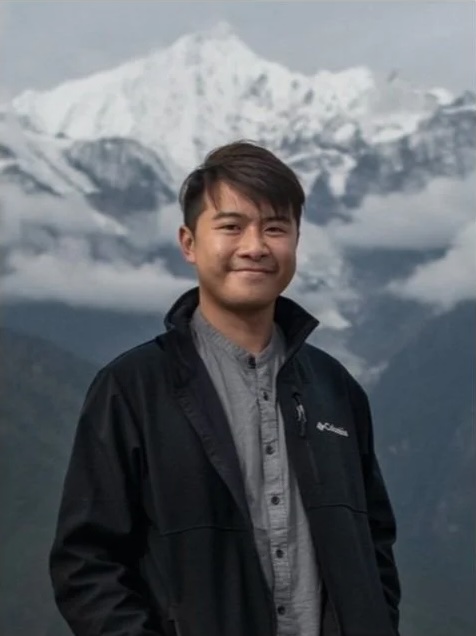
Pak Yiu is the US Correspondent for Nikkei Asia, based in New York. Image provided by Pak Yiu.
A second dimension highlighted in the conversation is internal instability within the People’s Liberation Army (PLA). The PLA has seen senior leadership turnover, including the removal of two former Vice Chairmen of the Central Military Commission, He Weidong and Zhang Youxia, for disciplinary reasons within a twelve month period, which may affect military readiness for operations abroad.
As a result, China is more likely working behind the scenes, engaging both Iran and regional partners with whom it maintains close ties, such as the United Arab Emirates and Saudi Arabia, to de-escalate tensions and stabilize trade flows. In 2023, China used its relationships with major strategic competitors Iran and Saudi Arabia to broker the normalization of relations between the two nations, which was a notable diplomatic milestone designed to bolster Beijing’s credibility as a global actor.
Yiu noted that Chinese interlocutors he is speaking to say that, for China, Trump likely presents the chance to stabilize its relationship with the United States following years of ill will between the countries since the Trump-initiated trade war began in 2018. According to these sources, China-based analysts tend to view Trump as a transactional actor, not motivated by ideology but by immediate gains — a diplomatic style they believe may not persist under a future administration, regardless of party. Under this logic, if China can offer a sufficiently attractive negotiating package, Trump could be open to resetting aspects of the bilateral relationship, potentially enabling increased Chinese investment, improved trade relations and reduced tensions at both the governmental and societal levels.
At the time of the discussion, China yet to publish topics for discussion at the upcoming Xi-Trump meeting, and the United States had also not released details, as its attention remained focused on the conflict in Iran. As China grapples with a less predictable world driven by economic upheaval from the Iran conflict, the advance of artificial intelligence, accelerating domestic demographic pressures and more, participants emphasized that reducing global instability is a top priority for Beijing. In this context, China views its relationship with the United States as central to achieving that goal. Through this lens, discussion participants agreed that Beijing’s approach to the Iran conflict can be understood as an effort to reduce tensions and preserve a stable international environment conducive to China’s continued economic development.
By Kit Mention, Young China Watchers
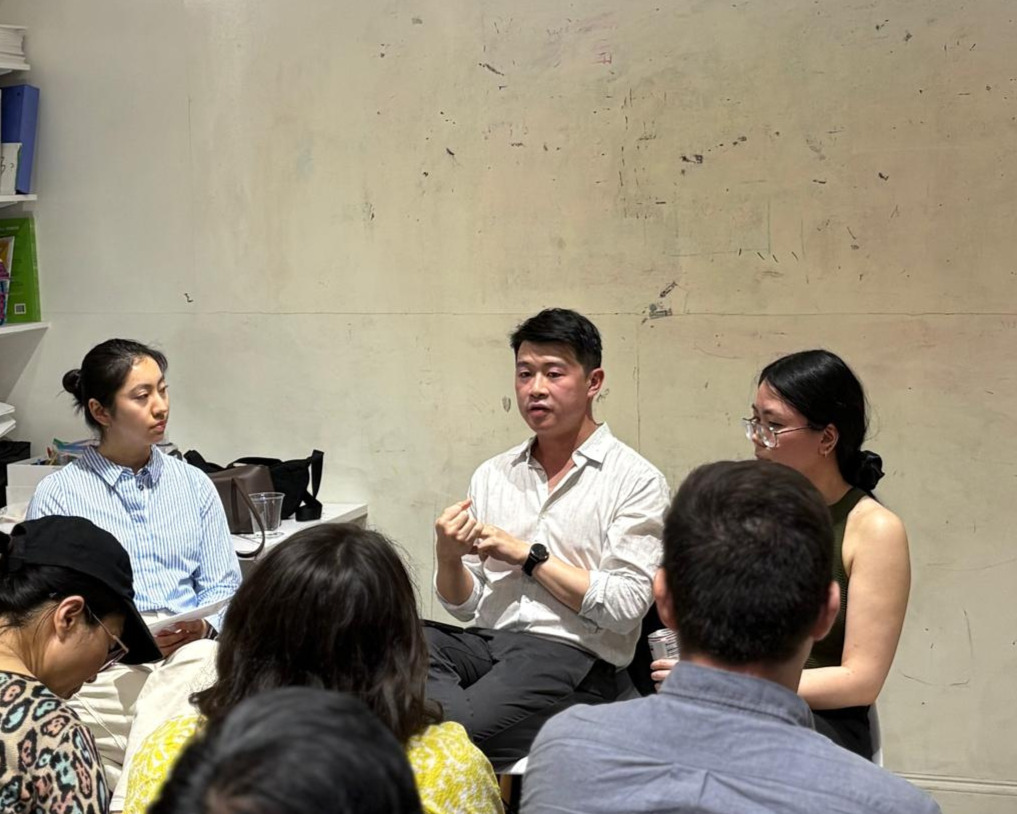
Nikkei Asia Correspondent Pak Yiu (center) with Camilla He (left) and Varda He (right) of YCW New York. Image from YCW New York.